
If Alternatives Exist, Why Are Animals Still Suffering?
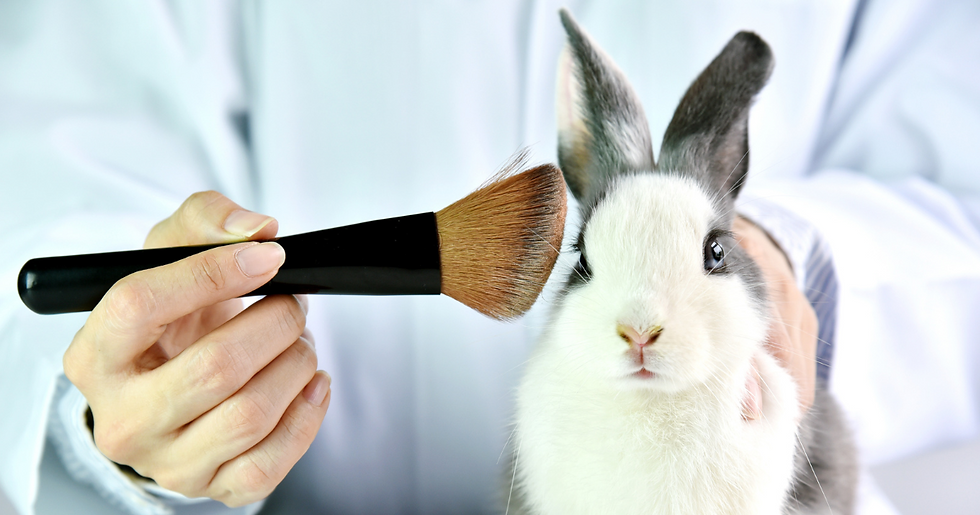
In today’s world, the term “animal testing” gets thrown around a lot. You see it on product labels, social media, even in ads. But most people don’t really stop to think about what it actually means or what’s happening behind the scenes. It sounds clinical, almost harmless. It isn’t. And the fact that there are better options now makes it even harder to ignore. So why is it still happening?
Animal testing is mostly used in the cosmetics industry to check whether ingredients are safe for people. Companies usually use smaller animals like rabbits, guinea pigs, rats, and mice. On paper, it sounds straightforward. In reality, it’s a lot more disturbing.
One common method involves putting chemicals directly onto an animal’s skin to see how it reacts. Researchers look for signs of irritation or absorption. That alone is uncomfortable to think about, but it gets worse.
Take the Draize test, for example. Rabbits are often used because they don’t produce tears the same way humans do, which makes their eyes more vulnerable. In this test, rabbits are restrained and substances are placed directly into their eyes. Then researchers watch what happens over time. This can mean redness, swelling, bleeding, even blindness. If the damage is severe, the animal is usually killed. If not, they’re often used again. That part really sticks with you.
Another method is the LD50 test. This one focuses on how much of a substance it takes to cause death. Animals are forced to consume large amounts of a chemical, sometimes through tubes. The process can go on for days or even weeks. It’s not quick, and it’s definitely not painless. It’s basically measuring suffering until the outcome is reached.
What makes all of this harder to justify is the fact that alternatives already exist. In-vitro testing, for instance, uses human cells grown in labs to test how substances affect skin. There are also 3D tissue models that mimic real human skin and eyes pretty closely. These methods are not only more humane, they’re often more accurate when it comes to predicting how humans will react. So it’s not like we’re stuck without options.
So why do companies still rely on animal testing?
A big part of it comes down to systems that are already in place. Older testing methods are standardized and widely accepted by regulators. Companies know how long the process will take and what results to expect. Switching to newer methods means more testing, more approvals, and more uncertainty. It also means spending more money upfront. And if the current system still meets the legal requirements, a lot of companies just don’t feel the need to change.
That’s where it starts to feel less like a scientific issue and more like a business decision. If more ethical and effective methods are available, then continuing animal testing starts to look like a choice, not a necessity. And honestly, it’s hard not to see it as convenience winning over responsibility.
At the end of the day, being an ethical company should mean more than just following the rules. It should mean actually thinking about the impact of your actions. Not just on animals, but on consumers and society too. People are becoming more aware of these issues, and they’re starting to care more about what they support.
If better options already exist, then sticking with harmful ones says a lot. And not in a good way.
References
ADA. “Say No to Animal Testing in Cosmetics.” ADA Cosmetics, 31 May 2024, https://ada-
cosmetics.com/expert-stories/animal-testing-cosmetics/.
Gingras, Marie-Noël. “Cosmetic Testing on Animals: A Cruel Practice.” SPCA de Montréal, 12 August
2020, https://www.spca.com/en/cosmetic-testing-on-animals-a-cruel-practice/.
Millstein, Seth. “Animal Testing for Cosmetics Is Still (Unnecessarily) Common.” Sentient, 31 January


Comments